Wisdoms Of Jack Bogle
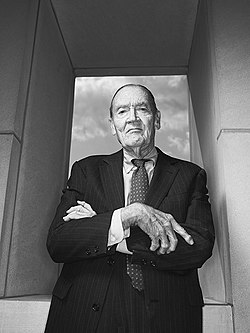
John C. Bogle founded Vanguard in 1974 and built the first index fund available to everyday investors. Across his career he returned to a handful of core ideas again and again: costs matter, time is your friend, and owning the whole market beats trying to pick winners.
What follows is his wisdom, distilled from interviews and talks he gave over the years. Each idea applies directly to South African TFSA investors building long-term portfolios.
The lower price you pay for owning the stock market or bond market - the better off you are
What is Risk? ... It is not volatility. We use volatility to measure risk.
A serious money account, where you put money in a stock market index fund and balance it out with bonds depending on age and so on ... and don't look at it. Don't look at it for 50 years. Don't peek. But when you retire open the envelope. Be sure a doctor is nearby to revive you. You can't believe there is that much money in the world.
For most investors, something like 65% stocks, 35% bonds is an intelligent allocation. Now we know stocks almost certain to do better in the long run due to the nature of the capital markets.
Bogle's Rules of Investing
1. Remember reversion to the mean
What goes up must go down. Don't buy funds on the basis of past performance, because only in the extraordinary case does it continue. Investors buy the high because that is when it looks the best. When the temptation is overwhelming you put your money in and you are disappointed thereafter.
2. Time is your friend, impulse is your enemy
When you invest over 40 or 50 years the miracle of compound interest pays off hugely. Focus on the long term. If you get distracted by the downs, impulse will get you in and out of the market. When the market is low and people are worried - that is a good time to buy. When people want to buy stocks - that is at the high. If you are aggressive buying at the high and selling at the low, your money is not going to last very long. If we just did not pay any attention to the swings ...
3. Buy right and hold tight
Buy right means diversify - in an index fund at low cost. You do not need to know when certain sectors of the market are performing well or poorly - own it all. Hold tight means when there are periods of adversity, fear and greed - do not do anything.
Use the ETF comparison tool to find low-cost index ETFs, or build and backtest your own allocation in the Strategy Builder.
Compare ETFs → Build a strategy →4. Have realistic expectations
The bagel versus doughnut. Long-term investing is the bagel and short-term speculation is the doughnut. The bagel is nutritious and good for you.
5. Forget the needle, buy the haystack
Picking stocks or funds is very difficult. Like finding a needle in a haystack. Rather own the haystack of the US or the entire world. Then do not do anything once you have the haystack.
6. Minimise the croupier's take
The magic of compounding returns over the long term is overwhelmed by the tyranny of compounding long-term costs. A 7% net return with a 9% gross return has cost you 70% of your capital over your lifetime.
Use the ETF comparison tool to compare total expense ratios side by side and see which funds keep more of your returns.
7. There is no escaping risk
Inflation eats away at the value of your money. Stocks at least have a fighting chance to overcome the ravages of inflation. You need more than break even if you are going to build a retirement fund - bond returns need to beat inflation.
8. Don't fight the last war
What happened or worked in the past is no predictor of the future. Historically the returns of stocks are 9% - 4.5% dividend yield and 4.5% earnings growth. Today the yield on stocks is 2.5%. The math will show 7%. Don't listen to history.
9. The hedgehog beats the fox
Foxes represent financial institutions and hedgehogs are index funds. The fox knows many things but the hedgehog knows one great thing. The hedgehog knows that all the fooling around out there does you no good at all - own the market.
10. Stay the course
Make a plan, stick to it and eliminate unnecessary risks. Once you have set an intelligent asset allocation, taken into account your risk preference and financial situation, then do not touch it. Learn to raise your bond position as you age.
11. Don't peek
If you do not look, it is in your interest. Why open the statement and say "I'm rich" or "I'm ruined"? Just throw it in the bin.
Sources
- Jack Bogle on Index Funds, Vanguard and Investing Advice
- Jack Bogle: Volatility is NOT Risk
- Jack Bogle: Owning Individual Stocks can be Dangerous
- John Bogle's 10 Rules of Investing
Also read: How A 1% Fee Difference Can Cost You A Fortune Over 40 Years - Bogle's tyranny of compounding costs in practice. And see how the TFSA Labs platform guide helps you apply these principles.
Try the tools behind this article
Create a free account to compare ETFs, explore the efficient frontier, and test optimal strategies with your own data - no credit card required.
Create free account